Professional Accessibility Solutions
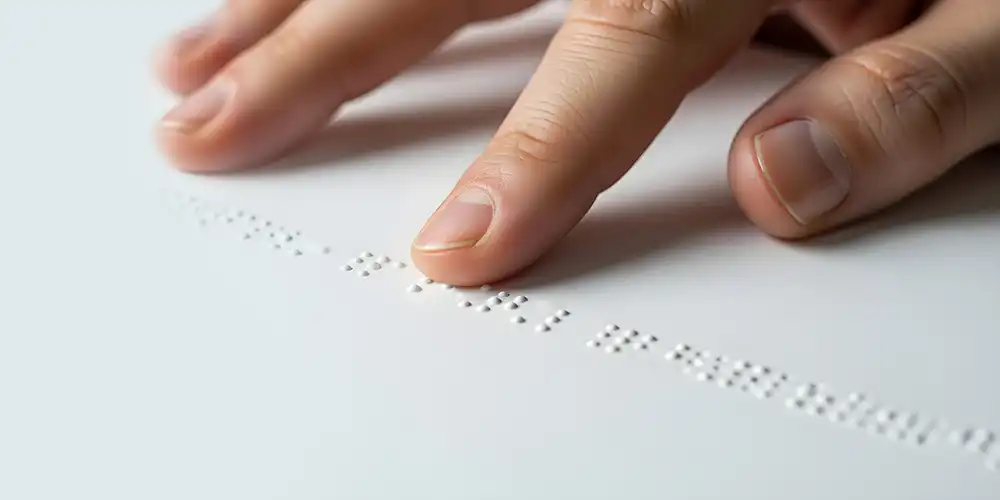
Accessibility signage is a legal requirement. It's also a signal that your space was designed with everyone in mind. Done right, Braille and tactile signage helps people navigate your building with confidence while integrating seamlessly into your architecture and branding. Done poorly, it looks bolted on and institutional. We design, fabricate, and install Braille signage that meets Accessibility Standards Canada requirements and looks like it belongs in your space.
ASC Compliant
Meet Accessibility Standards Canada requirements with confidence. Our Braille signage is designed and manufactured to align with ASC specifications and applicable building code standards, including raised tactile lettering, proper Braille spacing and positioning, high-contrast color combinations, non-glare surface finishes, and code-compliant mounting placement. Every sign is reviewed for tactile clarity, readability, and placement consistency throughout your facility. Applications include office buildings, healthcare facilities, schools, hotels, retail centers, government buildings, and multi-residential developments.
Built for Everyday Use
Braille signage takes constant public interaction. It needs to stay readable, durable, and professional over years of daily use. We manufacture using high-quality materials including acrylic, photopolymer, aluminum, stainless steel, high-pressure laminate, and composite materials. Precision fabrication techniques including CNC routing, laser cutting, UV printing, and anti-scratch protective coatings ensure your signs remain compliant and legible in high-traffic environments. UV-resistant finishes are available for exterior applications.
Integrated Design
Accessibility signage should complement your space, not detract from it. We integrate compliant Braille signage seamlessly into your architectural and branding standards using custom color matching, architectural finish options, coordinated typography and pictograms, and modern design options that align with your facility's aesthetic. Whether you need a consistent facility-wide appearance or signage that matches specific zones and departments, we design signage systems that support inclusivity while enhancing the visual quality of your space.
Wayfinding Integration
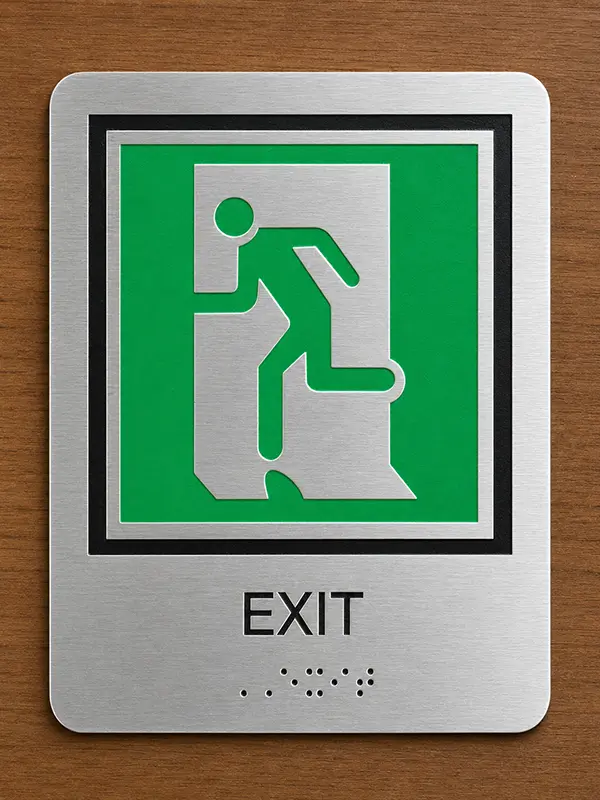
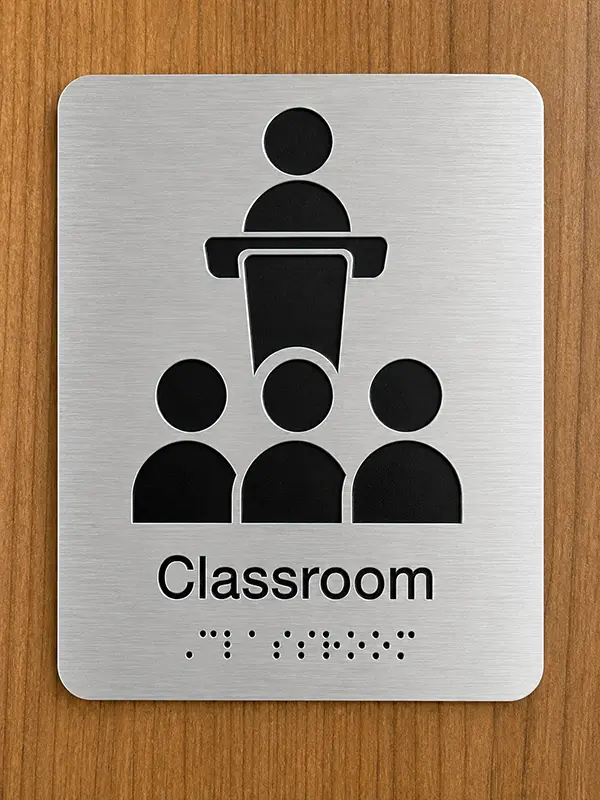
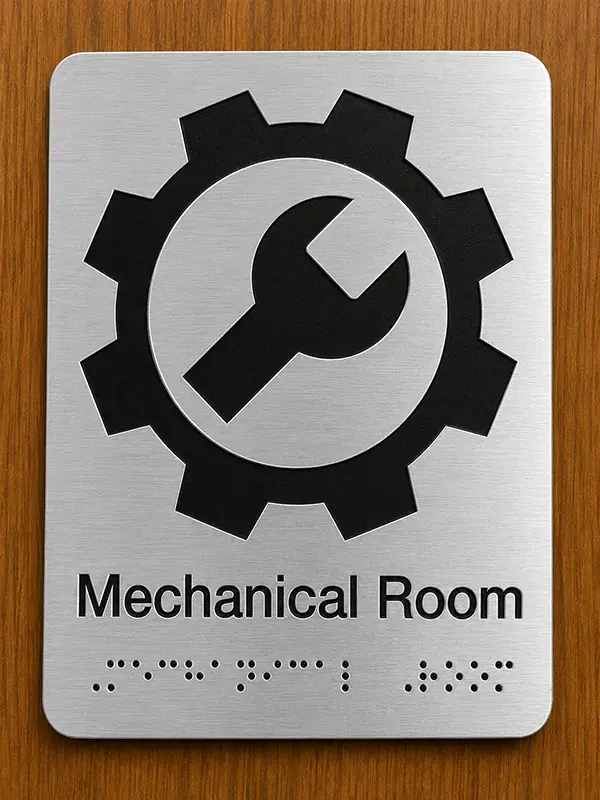
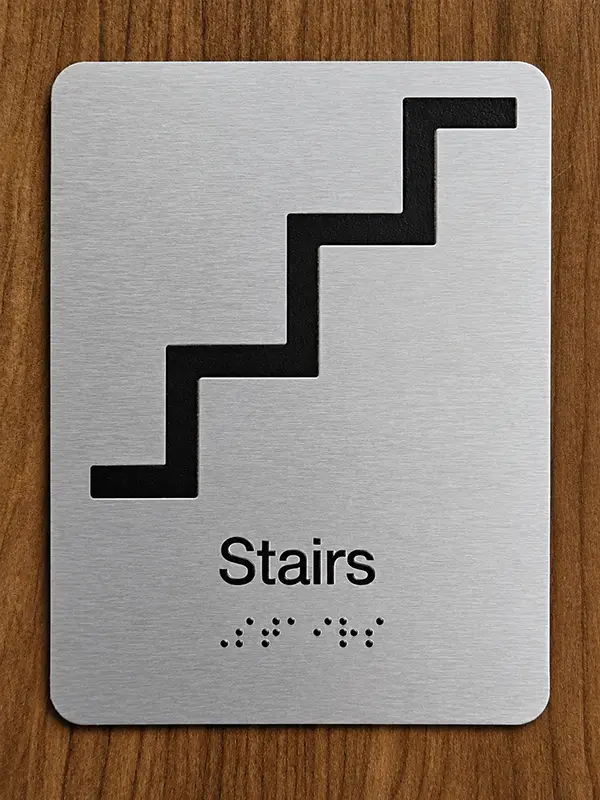
Braille signage works best as part of a comprehensive wayfinding strategy. We coordinate tactile signage with directional systems, room and department identification, stairwell and elevator navigation, emergency egress guidance, and accessible routes and entrances. Planning considerations include traffic flow, placement, multi-floor coordination, user-friendly navigation hierarchy, and integration with your visual wayfinding system. Strategic placement improves usability, reduces confusion, and enhances the experience for everyone in your facility.
How We Work
We start by reviewing your facility layout, compliance requirements, and branding objectives to determine the appropriate signage system. Then we develop custom sign layouts that balance compliance, usability, and architectural integration. We fabricate using precision production technologies to ensure tactile accuracy, durability, and finish quality. Finally, our installation team ensures code-compliant placement to maximize accessibility and ease of navigation.
You get accessible signage that meets code, integrates with your space, and lasts.
Local Production,
Superior Quality
Because we produce our Braille signage in-house at our Nova Scotia facility, we offer advantages that outsourced providers cannot match.
No Outsourcing Delays
Local production means consistent quality, responsive service, and competitive pricing without the wait times of third-party vendors.
Direct Compliance Support
We understand Canadian accessibility requirements and work directly with you to ensure your project meets all necessary codes.
Custom Material Options
From elegant office plaques to rugged industrial markers, we can apply compliant Braille to a wide variety of materials and finishes.
Precision Technology
Our advanced printing equipment ensures that every tactile element is placed with mathematical accuracy for maximum readability.